Pages

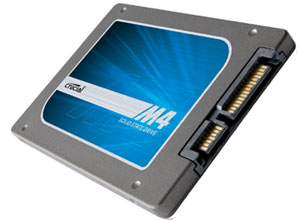
Cheap Crucial CT256M4SSD2CCA 256GB m4 2.5-inch Internal SSD with Data Transfer Kit

Crucial CT256M4SSD2CCA 256GB m4 2.5-inch Internal SSD with Data Transfer KitBuy Crucial CT256M4SSD2CCA 256GB m4 2.5-inch Internal SSD with Data Transfer Kit

Crucial CT256M4SSD2CCA 256GB m4 2.5-inch Internal SSD with Data Transfer Kit Product Description:


  • Weight:75 g
  • Features:S.M.A.R.T.
  • Interface:Serial ATA-600
  • Height:0.95 cm
  • Device Type:Solid state drive - internal

Product Description

Crucial Technology Crucial m4 SSD 256GB 25 w Data Transfer Kit CT256M4SSD2CCA Components SSD Solid State Drive

Customer Reviews

Most Helpful Customer Reviews

2 of 2 people found the following review helpful.
5Beast of a drive, transforms your PC use completely
By luke997
Great SSD - as any, transforms PC experience into a pleasure.14 sec Windows 7 boot times, instant launch of the apps and access to any data, insanely fast internal transfers when muxing.512 GB capacity means I can finally have all photos and Lightroom catalog on the laptop and still have enough space for games/apps and ~200GB spare capacity to make sure the firmware can cycle flash cells well and don't reduce its life.1) General:Build quality is excellent - as with all Crucial (Micron) SSDs and included data transfer kit makes the swap to a new drive a doddle.2) Performance:SATA 2 mode (SATA 3 Sony Vaio laptop - with SATA reduced to 2 by the BIOS)Sequential:Read: 262.6 Mb\secWrite: 244.6 Mb\secRandom 512K:Read: 240.9 Mb\secWrite: 235.8 Mb\secRandom 4K:Read: 17.87 Mb\secWrite: 41.28 Mb\secSATA 3 mode (in my SATA 3 desktop)Sequential:Read: 418.3 Mb\secWrite: 254.1 Mb\secRandom 512K:Read: 376.7 Mb\secWrite: 252.3 Mb\secRandom 4K:Read: 21.18 Mb\secWrite: 101.6 Mb\secWell deserved 5/5, recommended!

2 of 2 people found the following review helpful.
4Good, but issues with some Samsungs.
By James Daly
I bought this item to enhance the performance of my new Samsung laptop: Samsung 350V5C 15.6-inch Laptop (Silver) - (Intel Core i3 3110M 2.4GHz Processor, 6GB RAM, 500GB HDD, DVDSM DL, LAN, WLAN, BT, Webcam, Integrated Graphics, Windows 8)Unfortunately, the software as supplied by Crucial to facilitate cloning does not support Windows 8, even in its latest version, so after lengthy calls to the very helpful Crucial call centre, I was left with three options:1. Forget the whole idea, and continue with the installed HDD.2. Full install of Windows 8 - Expensive!3. Find alternative cloning software.I dismissed the first two and set about researching suitable software. There was plenty about, but it didn't work. Having spent a long frustrating day achieving nothing, I decided to try one last time.I installed and ran Easeus Todo Backup 5.3 (free), which seemed to be working, and which after an hour announced that it had successfully cloned the original HDD to the SSD.With some trepidation, I yet again swapped over the drives, hit the Start button, and Eureka!Everything works perfectly; all settings transferred, and no tweaks required.I checked the read/write speeds with AS SSD Benchmark and achieved 471/192, some 8 times faster than before.I'm really very pleased, and would recommend this upgrade to anyone.Crucial tell me their software partners are working on a fix as several people have experienced this problem since the release of this machine with Windows 8 (Windows 7 is not affected). In the meantime, I can only relate my experiences and hope that I can save somebody a long and frustrating day.

7 of 8 people found the following review helpful.
5Great
By Nitin Mukerji
Great product; increases the speed of a MacBook phenomenally. Boot up times are unbelievable. Easy to install. The cloning software that comes with the flash drive didnt work for me; just used carbon copy cloner available free on the web. Well recommended.

See all 27 customer reviews...


Latest Price: Click Here - Amazon.co.uk!
More Info: Click Here - Amazon.co.uk!
See Customers Review: Click Here - Amazon.co.uk!

Buy Crucial CT256M4SSD2CCA 256GB m4 2.5-inch Internal SSD with Data Transfer Kit

Discounted Samsung HT-D5000 2.1ch 3D Blu-ray Home Cinema System with Built in Wi-Fi

Samsung HT-D5000 2.1ch 3D Blu-ray Home Cinema System with Built in Wi-FiBuy Samsung HT-D5000 2.1ch 3D Blu-ray Home Cinema System with Built in Wi-Fi

Samsung HT-D5000 2.1ch 3D Blu-ray Home Cinema System with Built in Wi-Fi Product Description:


  • 2.1 Channel System
  • 3D Blu-ray Player
  • 2D-3D Converter
  • Dolby True HD & DTS-HD

Product Description

Samsung HT-D5000 BluRay Theatre System 3D Wi-Fi Ready 2.1 500 Watts Smart Hub

Customer Reviews

Most Helpful Customer Reviews

5 of 5 people found the following review helpful.
5Fantastic Blu-Ray Home Cinema
By Pip
I had been looking for a Blu-Ray player for a while and it had to be Samsung to go with my TV i was not looking for a home cinema system. Then i found this for not much more than the Blu-Ray players i had been looking at so i ordered it what a fantastic bit of kit for an amazing price.It does everthing i wanted superb sound,great Blu-Ray player and the smart TV function too i cant fault it.Dont know about the 3D function as i will probably never use that as 3D TV does not interest me.Overall brilliant.

6 of 7 people found the following review helpful.
5Best value 2.1 cinema
By Ben Raffles
I looked at about eight 2.1 systems of various brands including sound bars by sharp and Samsung and the htd5000 seemed to be the best all rounder for under £200. The speakers are small and look great in typical Samsung gloss black. The aux gives the tv great sound very easily and the DVD player does the job perfectly. I'm yet to try the online functionality, but I couldn't see a better 2.1 system on the market for this price. Delivery very timely in perfect condition. Very happy.

3 of 4 people found the following review helpful.
2Samsung 3d blu ray home cinema
By Jules0375
Arrived quickly and easy to set up. Looked very smart but unfortunately, the picture quality when playing a regular DVD or Blu Ray disc was very grainy, despite having a full HD 3D Samsung TV. Had to return the product for an alternative model.

See all 7 customer reviews...


Latest Price: Click Here - Amazon.co.uk!
More Info: Click Here - Amazon.co.uk!
See Customers Review: Click Here - Amazon.co.uk!

Buy Samsung HT-D5000 2.1ch 3D Blu-ray Home Cinema System with Built in Wi-Fi

Price Compare Crucial CT512M4SSD2 512GB m4 2.5-inch SATA 6Gb/s (SATA III) Internal SSD

Crucial CT512M4SSD2 512GB m4 2.5-inch SATA 6Gb/s (SATA III) Internal SSDBuy Crucial CT512M4SSD2 512GB m4 2.5-inch SATA 6Gb/s (SATA III) Internal SSD

Crucial CT512M4SSD2 512GB m4 2.5-inch SATA 6Gb/s (SATA III) Internal SSD Product Description:


  • Weight:75 g
  • Width:70 mm
  • Depth:101 mm
  • Height:9.5 mm
  • Capacity:512 GB

Product Description

Technical Specifications: Format (inches): 2.5 " · Interfaces (type-maintain without number): SATA-III (600MB/s) · Transfer rate (reading): 500 MB/s · Transfer rate (writing): 260 MB/s · Type (manufacturer type): CT512M4SSD2 Description: CrucialSSD hard disk CT512M4SSD2 512 GB 2.5 " SATA-III (600MB/s

Customer Reviews

Most Helpful Customer Reviews

152 of 159 people found the following review helpful.
4Really fast, pretty small
By Christopher Burns
I picked up one of these a few days ago to complement a newer Sandy Bridge setup. For no reason I could ever figure out, my boot times were terrible with the motherboard (an Asus P8P67 Pro) using a conventional HD - on the order of 3 minutes from cold until the PC was responsive. Connected to a SATA-3 controller, this SSD reduced my boot time to around 35 seconds, and, once the desktop appears, the PC is fully responsive to whatever you want to do. It sounds obvious, but the main thing that differentiates SSDs from conventional HDs is this "snappiness" factor - seek times are completely flat, thus, the only delay is actually transferring data off the drive to RAM for CPU operations (and this drive is capable of >400 megabyte per second bursts). The drive is also completely silent, and it's slightly weird not to hear the usual HD ticking & clicking. You may also need a 3.5" drive bay adapter; physically, the drive is about 50% bigger than a credit card and very light - alternatively, I have seen these drives held in place by double-sided tape - with no moving parts, you can pretty much put them anywhere the data and power cables will stretch. Also, a side effect of the "solid state" part of the drive is that it is largely unaffected by any movements or accidental drops - anything that doesn't destroy the casing will leave the drive completely unaffected - the interior is largely the same as a USB flash drive, but with larger capacity chips and a small controller.I initially had some trouble with the drive (some stuttering and pausing) after installing Windows7 then Intel's RST drivers (the drive is connected to an Intel ICH9 port), and decided that a re-format would be my best option to completely get rid of the Intel drivers. When installing Windows only takes 12 minutes - and at that, you're largely limited to your DVD drive's transfer rate more than anything else, it's no longer a chore, and using Win7's built-in ACHI drivers fixed the problem completely.There's also a little more to installing one of these compared with a standard HD. You should connect it to a SATA-3 drive port to get best performance (although it will remain very fast if you're using a SATA-2 port on older motherboards). You also need to run the Windows Experience Index in Windows7 (and in fact, use Windows7 too, since it contains drive control commands optimised for SSDs not found in older versions of Windows). When Windows has run the Windows Experience Index, it will fully recognise the drive as an SSD and automatically disable some scheduled processes like defragmentation etc. Lastly you can check your speeds are what they should be with e.g. AS SSD Benchmark - sequential reads should be over 300 or 400 megabytes per second depending on the controller you're using, and if so, you're good to go.Obviously, the downsides to this drive are the high cost and relatively small capacity; at 120GB after formatting, a default installation of Windows7 itself will immediately eat another 17GB or so, so you're basically looking at 100GB all told once you're set up. While smaller applications like web-browsers etc. load more or less instantly now, more extensive applications show less benefit - e.g. a modern multi-gigabyte game will only show speed differences of a couple of seconds. In all, it's a mixed bag, but, I could see myself abandoning conventional HDs in the future as prices come down over time. If you need very large quantities of storage space, you won't want to use these, but 100GB is minimally useful for a working system plus a few apps. And of course, you can continue to use any existing HDs you have for secondary storage.EDIT : Been running this drive for slightly over a year now with no real ill effects, although I am finding the 128gb quite cramped now with the addition of a Dropbox account (weirdly, even though the Dropbox folder is on another, larger drive). A minor speed-bump was the firmware update Crucial sent out late last year where unless installed, the drive would reboot itself after (x) thousand hours of use. As a bonus, however, once you have the update installed, you get an extra 100mb/sec speed boost, so it's not all bad - although the bug would effectively prevent you from using your PC for more than an hour at a time.Since I bought this, prices have roughly halved, and I'm strongly considering getting another one of these in the 256GB flavour to complement the existing one.

27 of 28 people found the following review helpful.
5Excellent. Works great with MacBook Pro.
By jbarrett
This works very well with my MacBook Pro (15 inch early 2011). However it is necessary to install a firmware update (see instructions below) in order for the SSD to work. Once installed I noticed a dramatic speed improvement. Did a fresh install of Mountain Lion and it's like a new laptop!Instructions for MacBook Pro (early 2011):1) Backup your files to an external hard drive with Time Machine.2) Go to the Crucial website and download the latest firmware (as of writing version 000F). This consists of a .iso and a .pdf guide.3) Burn the iso to a black CD or DVD using Disk Utility. (The USB option did NOT work for me!). There's plenty of guides/videos on how to burn an .iso if you search the web.4) Two options at this point: a) Create a bootable OS X install USB so that you can install an operating system on the SSD once it's installed or b) use your Time Machine backup to copy your files to your new SSD. I'll follow option a).5) Insert the firmware DVD/CD into your Macbook and shut it down. Open it up and remove your current hard drive. Replace it with the SSD and screw everything back in place (again there's plenty of excellent videos online if you're unsure...)6) Turn on your MacBook. I didn't have to press anything. After about 30 seconds the firmware updater presented itself. You'll be prompted for a 'yes' or 'no'. Type 'yes' and hit enter. After another minute or so the firmware will be updated.7) Hold the power button to switch off your MacBook. Insert your OS X install USB stick. Power up your MacBook while holding the option key. Select the OS X installer.8) Once you've booted into the USB installer you'll be presented with a menu. Select Disk Utility. If everything has gone according to plan you should see your new SSD drive in the menu. Reformat it to Mac OS (Journaled). Exit Disk Utility and from the menu you can now select Install OS X. Choose this and select your SSD for installation.Additional options:At this point you might want to invest in a special hard drive caddy that allows your to replace the internal DVD drive with a second hard drive. I bought the brainy deal version for about £12 on amazon. If you want to use this open up your MacBook again. Unscrew the DVD drive and replace it with your the hard drive caddy containing your original HD (again plenty of good guides online..). With this setup you have the speed of an SSD and the larger storage capacity of hard drive. Obviously install the system and apps on the SSD. Larger downloads, movies, or backups can be placed on your second hard drive.Enjoy!

79 of 84 people found the following review helpful.
5Crucial M4 SSD Turbo-charged my PC
By Mannu
I use my PC mainly for gaming (racing/simulator), photo processing, video creation, working on documents, entertainment (music and videos) and internet browsing.Before the Crucial M4, my PC configuration (based on a P55 chipset) looked something like this: Windows 7 64-bit, Processor: i5-760 (@ 2.8 Ghz), 8 GB RAM, 2xGTX 460 (in SLI), 1 TB HDD.My choice for the HDD (spinning at 5400 rpm) wasn't the wisest and I could see how much it affected my system's overall performance. Adding a SSD-HDD was really the only way I could maximise the potential of my system.I've been watching the evolution of the SSDs from the the past couple of years. Apart from the prices, (earlier) firmware issues kept me from investing in a SSD-HDD.However, as the performance of the SSDs had started to become more stable (compared to earlier), I thought it was the right moment to start looking for something to upgrade my system with.Since the SSD will be used as a system drive (OS+programs and the current game that I'm playing), a 120/128 GB SSD-HDD was my target.My criteria for selection were:1. Performance on SATA III (6 Gbps) - although my system supports only SATA II, I wanted something that was 'future-proof'2. Performance on SATA II (3 Gbps) - this was a critical point for selection3. Reliability - many 'performance oriented' SSDs have the reliability of a leaking boat. I wanted something that had a proven track-record for reliability4. Performance per $5. Cost per GBIt took me almost two weeks to gather enough information about all the SSDs in the market and check if they met my criteria.Many SSDs failed to meet criterion #2, which shortened my list to about 5 names.The controller on the SSDs impacts the performance and also the reliability of a SSD. Sandforce controller based SSDs show better performance, but reliability differs from SSD manufacturer to manufacturer.I was left with 2 names in the end: Mushkin Chronos Deluxe and Crucial M4.The ultimate winner for me was the Crucial M4 for the following reasons:1. Performance on SATAIII may not be the best, but with the 0009 firmware update, performance levels are right amongst the top Sandforce controller based SSDs.2. Crucial M4 SSD drives have shown the least percentage performance drop when operating on SATAII. The Sandforce controller based drives, except the Mushkin Chronos Deluxe, are hit badly.3. In terms of reliability, only Intel, Mushkin and Crucial have shown sustained stable results.4. Crucial M4 ranks amongst the top SSDs for performance per $. It is only bettered by its older sibling the C300.5. Crucial's SSDs have by far the best (or almost the best) cost per GB over the entire range of SSDs offered by any manufacturer.6. Availability of Crucial M4 drives is better than Mushkin Chronos Deluxe.Migrating my system drive (C:) from my old HDD to the Crucial M4 with a $19.95 software made a big mess. After migration, the SSD drive was not configured for optimum performance and after 3 re-boots, my geniune Windows 7 got invalidated. This forced me to take the much preferred route of a fresh install.Doing a fresh install (or reinstall) in the past was always a daunting task taking me sometimes up to 2 days to set up my PC right - with all required programs, settings etc. This incredible drive shrunk that time to 4 hours!!!The performance after the fresh install also improved significantly. The AS-SSD score went from 365 (post-migration) to 515 (fresh-install) - not bad for a SATAII.To summarise, metaphorically, the addition of the Crucial M4 128 GB to my system is like the BMW M5. It is one of the best 'track-day' weapons, and it also seats 5 persons!Kudos to Crucial for a great product!

See all 356 customer reviews...


Latest Price: Click Here - Amazon.co.uk!
More Info: Click Here - Amazon.co.uk!
See Customers Review: Click Here - Amazon.co.uk!

Buy Crucial CT512M4SSD2 512GB m4 2.5-inch SATA 6Gb/s (SATA III) Internal SSD

Discount CEL DM20 20-inch Self Propelled Rotary Lawn Mower

CEL DM20 20-inch Self Propelled Rotary Lawn MowerBuy CEL DM20 20-inch Self Propelled Rotary Lawn Mower

CEL DM20 20-inch Self Propelled Rotary Lawn Mower Product Description:


Product Description

CEL »DM20 20 inch Self Propelled Rotary Lawn Mower This mower has 2 motors, the first is an ultra-reliable, super-efficient, high-powered, high torque, large diameter 24V DC motor that will cut through long, dense grass with ease. The second motor can drive the rear wheels at a steady walking pace of 0.8 metres per second. These 2 motors are controlled separately using simple, easy to operate levers on the handle including a removable safety key to prevent accidental starting. Large rear wheels make the mower easy to manoeuvre around trees and bushes. Perfect for uneven ground and providing more traction for the drive motor. Unequalled 24V 17Ah battery, this Pb (lead acid) battery was chosen for it's extremely high capacity and it's proven reliability. If properly used these batteries can give 10+ years of trouble free use. A fully charged battery can provide over an hour of mowing time, enough to completely cut a large garden. Mulch, Side or Rear discharge means you can leave long clippings on the grass, catch them in the 20L catcher or mulch them to fertilize your lawn all the parts you need are included and are very easy to fit and remove. Steel main deck/chassis, clever design and very high manufacturing standards make this mower one of the best available. Comes assembled, you only need to fit the upper handle to the unit using the 2 included hand tightened nuts and bolts then drop in the battery. Get mowing faster, no messy smelly fuels, no annoying, dangerous power cables. Just fit the battery and press the levers, it doesn't get any easier. Features: Steel deck Hardened steel blades cut a 508mm (20") path Mulching Insert Side Discharge OR Rear Collection 20L Grass Bin 17Ah Rechargeable Pb battery Charger 7 Easily adjustable cutting levels from 35-85mm (1 3/4-3 1/4") DM20

Customer Reviews

Most Helpful Customer Reviews

10 of 11 people found the following review helpful.
5great mower
By S. Collings
got one of these the other day to replace an old petrol mower and must say i am very impressed especially with not needing to use fuel and with no starting problems.I particularly like the 2nd motor which drives the wheels for moving it around but not cutting at the same time.would recommend to anyone.

3 of 3 people found the following review helpful.
5Fantastic
By F. W. Chick
When I first opened the box and saw this formula 1 racing mower standing before me, it was unbelievable. What a fantastic machine. only required the handle to be fitted with two finger screws and then ready to go, even the battery was fully charged. It was teaming with rain, so I could not use it immediately, but the next day, wow!! My adult daughter happened to be paying a visit, so she took it out for its first run, and thought it was terrific. She done the back and front garden on one charge with no problem. A truly wonderful machine, no push or pulling, just walk behind it and steer. Definitely a TEN star product. Just the job for an old man like me that hates gardening. Thank you Amazon for finding this product for me.

2 of 2 people found the following review helpful.
5Dlanods opinion
By Dlanod
First class product very well designed and manufactured being made in China not known if it was a British design not that it matters. Unfortunately I had to return it to the supplier I just could not cope with the sheer weight and walking speed {I am 83} I would have loved to have kept it though if only it had been smaller and slower.My fault I did not read the specification properly.

See all 3 customer reviews...


Latest Price: Click Here - Amazon.co.uk!
More Info: Click Here - Amazon.co.uk!
See Customers Review: Click Here - Amazon.co.uk!

Buy CEL DM20 20-inch Self Propelled Rotary Lawn Mower

Price Comparisons Crucial CT256M4SSD2 256GB m4 2.5-inch SATA 6Gb/s (SATA III) Internal SSD

Crucial CT256M4SSD2 256GB m4 2.5-inch SATA 6Gb/s (SATA III) Internal SSDBuy Crucial CT256M4SSD2 256GB m4 2.5-inch SATA 6Gb/s (SATA III) Internal SSD

Crucial CT256M4SSD2 256GB m4 2.5-inch SATA 6Gb/s (SATA III) Internal SSD Product Description:


  • Weight:75 g
  • NAND Flash Memory Type:Multi-level cell (MLC)
  • Form Factor:2.5" x 1/8H
  • Device Type:Solid state drive - internal
  • Interface:Serial ATA-600

Product Description

Technical Specifications: Format (inches): 2.5 " · Interfaces (type-maintain without number): SATA-III (600MB/s) · Transfer rate (reading): 500 MB/s · Transfer rate (writing): 260 MB/s · Type (manufacturer type): CT256M4SSD2 Description: CrucialSSD hard disk CT256M4SSD2 256 GB 2.5 " SATA-III (600MB/s

Customer Reviews

Most Helpful Customer Reviews

152 of 159 people found the following review helpful.
4Really fast, pretty small
By Christopher Burns
I picked up one of these a few days ago to complement a newer Sandy Bridge setup. For no reason I could ever figure out, my boot times were terrible with the motherboard (an Asus P8P67 Pro) using a conventional HD - on the order of 3 minutes from cold until the PC was responsive. Connected to a SATA-3 controller, this SSD reduced my boot time to around 35 seconds, and, once the desktop appears, the PC is fully responsive to whatever you want to do. It sounds obvious, but the main thing that differentiates SSDs from conventional HDs is this "snappiness" factor - seek times are completely flat, thus, the only delay is actually transferring data off the drive to RAM for CPU operations (and this drive is capable of >400 megabyte per second bursts). The drive is also completely silent, and it's slightly weird not to hear the usual HD ticking & clicking. You may also need a 3.5" drive bay adapter; physically, the drive is about 50% bigger than a credit card and very light - alternatively, I have seen these drives held in place by double-sided tape - with no moving parts, you can pretty much put them anywhere the data and power cables will stretch. Also, a side effect of the "solid state" part of the drive is that it is largely unaffected by any movements or accidental drops - anything that doesn't destroy the casing will leave the drive completely unaffected - the interior is largely the same as a USB flash drive, but with larger capacity chips and a small controller.I initially had some trouble with the drive (some stuttering and pausing) after installing Windows7 then Intel's RST drivers (the drive is connected to an Intel ICH9 port), and decided that a re-format would be my best option to completely get rid of the Intel drivers. When installing Windows only takes 12 minutes - and at that, you're largely limited to your DVD drive's transfer rate more than anything else, it's no longer a chore, and using Win7's built-in ACHI drivers fixed the problem completely.There's also a little more to installing one of these compared with a standard HD. You should connect it to a SATA-3 drive port to get best performance (although it will remain very fast if you're using a SATA-2 port on older motherboards). You also need to run the Windows Experience Index in Windows7 (and in fact, use Windows7 too, since it contains drive control commands optimised for SSDs not found in older versions of Windows). When Windows has run the Windows Experience Index, it will fully recognise the drive as an SSD and automatically disable some scheduled processes like defragmentation etc. Lastly you can check your speeds are what they should be with e.g. AS SSD Benchmark - sequential reads should be over 300 or 400 megabytes per second depending on the controller you're using, and if so, you're good to go.Obviously, the downsides to this drive are the high cost and relatively small capacity; at 120GB after formatting, a default installation of Windows7 itself will immediately eat another 17GB or so, so you're basically looking at 100GB all told once you're set up. While smaller applications like web-browsers etc. load more or less instantly now, more extensive applications show less benefit - e.g. a modern multi-gigabyte game will only show speed differences of a couple of seconds. In all, it's a mixed bag, but, I could see myself abandoning conventional HDs in the future as prices come down over time. If you need very large quantities of storage space, you won't want to use these, but 100GB is minimally useful for a working system plus a few apps. And of course, you can continue to use any existing HDs you have for secondary storage.EDIT : Been running this drive for slightly over a year now with no real ill effects, although I am finding the 128gb quite cramped now with the addition of a Dropbox account (weirdly, even though the Dropbox folder is on another, larger drive). A minor speed-bump was the firmware update Crucial sent out late last year where unless installed, the drive would reboot itself after (x) thousand hours of use. As a bonus, however, once you have the update installed, you get an extra 100mb/sec speed boost, so it's not all bad - although the bug would effectively prevent you from using your PC for more than an hour at a time.Since I bought this, prices have roughly halved, and I'm strongly considering getting another one of these in the 256GB flavour to complement the existing one.

27 of 28 people found the following review helpful.
5Excellent. Works great with MacBook Pro.
By jbarrett
This works very well with my MacBook Pro (15 inch early 2011). However it is necessary to install a firmware update (see instructions below) in order for the SSD to work. Once installed I noticed a dramatic speed improvement. Did a fresh install of Mountain Lion and it's like a new laptop!Instructions for MacBook Pro (early 2011):1) Backup your files to an external hard drive with Time Machine.2) Go to the Crucial website and download the latest firmware (as of writing version 000F). This consists of a .iso and a .pdf guide.3) Burn the iso to a black CD or DVD using Disk Utility. (The USB option did NOT work for me!). There's plenty of guides/videos on how to burn an .iso if you search the web.4) Two options at this point: a) Create a bootable OS X install USB so that you can install an operating system on the SSD once it's installed or b) use your Time Machine backup to copy your files to your new SSD. I'll follow option a).5) Insert the firmware DVD/CD into your Macbook and shut it down. Open it up and remove your current hard drive. Replace it with the SSD and screw everything back in place (again there's plenty of excellent videos online if you're unsure...)6) Turn on your MacBook. I didn't have to press anything. After about 30 seconds the firmware updater presented itself. You'll be prompted for a 'yes' or 'no'. Type 'yes' and hit enter. After another minute or so the firmware will be updated.7) Hold the power button to switch off your MacBook. Insert your OS X install USB stick. Power up your MacBook while holding the option key. Select the OS X installer.8) Once you've booted into the USB installer you'll be presented with a menu. Select Disk Utility. If everything has gone according to plan you should see your new SSD drive in the menu. Reformat it to Mac OS (Journaled). Exit Disk Utility and from the menu you can now select Install OS X. Choose this and select your SSD for installation.Additional options:At this point you might want to invest in a special hard drive caddy that allows your to replace the internal DVD drive with a second hard drive. I bought the brainy deal version for about £12 on amazon. If you want to use this open up your MacBook again. Unscrew the DVD drive and replace it with your the hard drive caddy containing your original HD (again plenty of good guides online..). With this setup you have the speed of an SSD and the larger storage capacity of hard drive. Obviously install the system and apps on the SSD. Larger downloads, movies, or backups can be placed on your second hard drive.Enjoy!

79 of 84 people found the following review helpful.
5Crucial M4 SSD Turbo-charged my PC
By Mannu
I use my PC mainly for gaming (racing/simulator), photo processing, video creation, working on documents, entertainment (music and videos) and internet browsing.Before the Crucial M4, my PC configuration (based on a P55 chipset) looked something like this: Windows 7 64-bit, Processor: i5-760 (@ 2.8 Ghz), 8 GB RAM, 2xGTX 460 (in SLI), 1 TB HDD.My choice for the HDD (spinning at 5400 rpm) wasn't the wisest and I could see how much it affected my system's overall performance. Adding a SSD-HDD was really the only way I could maximise the potential of my system.I've been watching the evolution of the SSDs from the the past couple of years. Apart from the prices, (earlier) firmware issues kept me from investing in a SSD-HDD.However, as the performance of the SSDs had started to become more stable (compared to earlier), I thought it was the right moment to start looking for something to upgrade my system with.Since the SSD will be used as a system drive (OS+programs and the current game that I'm playing), a 120/128 GB SSD-HDD was my target.My criteria for selection were:1. Performance on SATA III (6 Gbps) - although my system supports only SATA II, I wanted something that was 'future-proof'2. Performance on SATA II (3 Gbps) - this was a critical point for selection3. Reliability - many 'performance oriented' SSDs have the reliability of a leaking boat. I wanted something that had a proven track-record for reliability4. Performance per $5. Cost per GBIt took me almost two weeks to gather enough information about all the SSDs in the market and check if they met my criteria.Many SSDs failed to meet criterion #2, which shortened my list to about 5 names.The controller on the SSDs impacts the performance and also the reliability of a SSD. Sandforce controller based SSDs show better performance, but reliability differs from SSD manufacturer to manufacturer.I was left with 2 names in the end: Mushkin Chronos Deluxe and Crucial M4.The ultimate winner for me was the Crucial M4 for the following reasons:1. Performance on SATAIII may not be the best, but with the 0009 firmware update, performance levels are right amongst the top Sandforce controller based SSDs.2. Crucial M4 SSD drives have shown the least percentage performance drop when operating on SATAII. The Sandforce controller based drives, except the Mushkin Chronos Deluxe, are hit badly.3. In terms of reliability, only Intel, Mushkin and Crucial have shown sustained stable results.4. Crucial M4 ranks amongst the top SSDs for performance per $. It is only bettered by its older sibling the C300.5. Crucial's SSDs have by far the best (or almost the best) cost per GB over the entire range of SSDs offered by any manufacturer.6. Availability of Crucial M4 drives is better than Mushkin Chronos Deluxe.Migrating my system drive (C:) from my old HDD to the Crucial M4 with a $19.95 software made a big mess. After migration, the SSD drive was not configured for optimum performance and after 3 re-boots, my geniune Windows 7 got invalidated. This forced me to take the much preferred route of a fresh install.Doing a fresh install (or reinstall) in the past was always a daunting task taking me sometimes up to 2 days to set up my PC right - with all required programs, settings etc. This incredible drive shrunk that time to 4 hours!!!The performance after the fresh install also improved significantly. The AS-SSD score went from 365 (post-migration) to 515 (fresh-install) - not bad for a SATAII.To summarise, metaphorically, the addition of the Crucial M4 128 GB to my system is like the BMW M5. It is one of the best 'track-day' weapons, and it also seats 5 persons!Kudos to Crucial for a great product!

See all 356 customer reviews...


Latest Price: Click Here - Amazon.co.uk!
More Info: Click Here - Amazon.co.uk!
See Customers Review: Click Here - Amazon.co.uk!

Buy Crucial CT256M4SSD2 256GB m4 2.5-inch SATA 6Gb/s (SATA III) Internal SSD

Cheap Calico FR 60" wide FR 10m roll (Click here for more sizes)

Buy Calico FR 60" wide FR 10m roll (Click here for more sizes)

Calico FR 60" wide FR 10m roll (Click here for more sizes) Product Description:


  • Back bone material to any serious upholsterer
  • Helps keep the dust out of the pad and prolongs the life of the chair
  • Flame Retardent

Product Description

Calico (100% cotton)
Passes Furniture and Fire Regulations BS 5852Part 1 Ignition Source 1

A good quality flame retardant calico approximately 152 cm (60 inches) wide. Used to line traditional upholstery. Helps to keep the dust out of pad and prolong the life of the upholstery. Also gives a better finish to your work

Customer Reviews

Most Helpful Customer Reviews

0 of 0 people found the following review helpful.
4Excellent value
By Gozzi
I used this to line a chair that I was re-upolstering to provide fire retardance. I will buy again for my next project.

See all 1 customer reviews...


Latest Price: Click Here - Amazon.co.uk!
More Info: Click Here - Amazon.co.uk!
See Customers Review: Click Here - Amazon.co.uk!

Buy Calico FR 60

Get Cheap Crucial CT128M4SSD2 128GB m4 2.5-inch SATA 6Gb/s (SATA III) Internal SSD

Crucial CT128M4SSD2 128GB m4 2.5-inch SATA 6Gb/s (SATA III) Internal SSDBuy Crucial CT128M4SSD2 128GB m4 2.5-inch SATA 6Gb/s (SATA III) Internal SSD

Crucial CT128M4SSD2 128GB m4 2.5-inch SATA 6Gb/s (SATA III) Internal SSD Product Description:


  • Weight:75 g
  • Height:9.5 mm
  • Form Factor:2.5" x 1/8H
  • Device Type:Solid state drive - internal
  • NAND Flash Memory Type:Multi-level cell (MLC)

Product Description

The Crucial m4 SSD

Customer Reviews

Most Helpful Customer Reviews

152 of 159 people found the following review helpful.
4Really fast, pretty small
By Christopher Burns
I picked up one of these a few days ago to complement a newer Sandy Bridge setup. For no reason I could ever figure out, my boot times were terrible with the motherboard (an Asus P8P67 Pro) using a conventional HD - on the order of 3 minutes from cold until the PC was responsive. Connected to a SATA-3 controller, this SSD reduced my boot time to around 35 seconds, and, once the desktop appears, the PC is fully responsive to whatever you want to do. It sounds obvious, but the main thing that differentiates SSDs from conventional HDs is this "snappiness" factor - seek times are completely flat, thus, the only delay is actually transferring data off the drive to RAM for CPU operations (and this drive is capable of >400 megabyte per second bursts). The drive is also completely silent, and it's slightly weird not to hear the usual HD ticking & clicking. You may also need a 3.5" drive bay adapter; physically, the drive is about 50% bigger than a credit card and very light - alternatively, I have seen these drives held in place by double-sided tape - with no moving parts, you can pretty much put them anywhere the data and power cables will stretch. Also, a side effect of the "solid state" part of the drive is that it is largely unaffected by any movements or accidental drops - anything that doesn't destroy the casing will leave the drive completely unaffected - the interior is largely the same as a USB flash drive, but with larger capacity chips and a small controller.I initially had some trouble with the drive (some stuttering and pausing) after installing Windows7 then Intel's RST drivers (the drive is connected to an Intel ICH9 port), and decided that a re-format would be my best option to completely get rid of the Intel drivers. When installing Windows only takes 12 minutes - and at that, you're largely limited to your DVD drive's transfer rate more than anything else, it's no longer a chore, and using Win7's built-in ACHI drivers fixed the problem completely.There's also a little more to installing one of these compared with a standard HD. You should connect it to a SATA-3 drive port to get best performance (although it will remain very fast if you're using a SATA-2 port on older motherboards). You also need to run the Windows Experience Index in Windows7 (and in fact, use Windows7 too, since it contains drive control commands optimised for SSDs not found in older versions of Windows). When Windows has run the Windows Experience Index, it will fully recognise the drive as an SSD and automatically disable some scheduled processes like defragmentation etc. Lastly you can check your speeds are what they should be with e.g. AS SSD Benchmark - sequential reads should be over 300 or 400 megabytes per second depending on the controller you're using, and if so, you're good to go.Obviously, the downsides to this drive are the high cost and relatively small capacity; at 120GB after formatting, a default installation of Windows7 itself will immediately eat another 17GB or so, so you're basically looking at 100GB all told once you're set up. While smaller applications like web-browsers etc. load more or less instantly now, more extensive applications show less benefit - e.g. a modern multi-gigabyte game will only show speed differences of a couple of seconds. In all, it's a mixed bag, but, I could see myself abandoning conventional HDs in the future as prices come down over time. If you need very large quantities of storage space, you won't want to use these, but 100GB is minimally useful for a working system plus a few apps. And of course, you can continue to use any existing HDs you have for secondary storage.EDIT : Been running this drive for slightly over a year now with no real ill effects, although I am finding the 128gb quite cramped now with the addition of a Dropbox account (weirdly, even though the Dropbox folder is on another, larger drive). A minor speed-bump was the firmware update Crucial sent out late last year where unless installed, the drive would reboot itself after (x) thousand hours of use. As a bonus, however, once you have the update installed, you get an extra 100mb/sec speed boost, so it's not all bad - although the bug would effectively prevent you from using your PC for more than an hour at a time.Since I bought this, prices have roughly halved, and I'm strongly considering getting another one of these in the 256GB flavour to complement the existing one.

27 of 28 people found the following review helpful.
5Excellent. Works great with MacBook Pro.
By jbarrett
This works very well with my MacBook Pro (15 inch early 2011). However it is necessary to install a firmware update (see instructions below) in order for the SSD to work. Once installed I noticed a dramatic speed improvement. Did a fresh install of Mountain Lion and it's like a new laptop!Instructions for MacBook Pro (early 2011):1) Backup your files to an external hard drive with Time Machine.2) Go to the Crucial website and download the latest firmware (as of writing version 000F). This consists of a .iso and a .pdf guide.3) Burn the iso to a black CD or DVD using Disk Utility. (The USB option did NOT work for me!). There's plenty of guides/videos on how to burn an .iso if you search the web.4) Two options at this point: a) Create a bootable OS X install USB so that you can install an operating system on the SSD once it's installed or b) use your Time Machine backup to copy your files to your new SSD. I'll follow option a).5) Insert the firmware DVD/CD into your Macbook and shut it down. Open it up and remove your current hard drive. Replace it with the SSD and screw everything back in place (again there's plenty of excellent videos online if you're unsure...)6) Turn on your MacBook. I didn't have to press anything. After about 30 seconds the firmware updater presented itself. You'll be prompted for a 'yes' or 'no'. Type 'yes' and hit enter. After another minute or so the firmware will be updated.7) Hold the power button to switch off your MacBook. Insert your OS X install USB stick. Power up your MacBook while holding the option key. Select the OS X installer.8) Once you've booted into the USB installer you'll be presented with a menu. Select Disk Utility. If everything has gone according to plan you should see your new SSD drive in the menu. Reformat it to Mac OS (Journaled). Exit Disk Utility and from the menu you can now select Install OS X. Choose this and select your SSD for installation.Additional options:At this point you might want to invest in a special hard drive caddy that allows your to replace the internal DVD drive with a second hard drive. I bought the brainy deal version for about £12 on amazon. If you want to use this open up your MacBook again. Unscrew the DVD drive and replace it with your the hard drive caddy containing your original HD (again plenty of good guides online..). With this setup you have the speed of an SSD and the larger storage capacity of hard drive. Obviously install the system and apps on the SSD. Larger downloads, movies, or backups can be placed on your second hard drive.Enjoy!

79 of 84 people found the following review helpful.
5Crucial M4 SSD Turbo-charged my PC
By Mannu
I use my PC mainly for gaming (racing/simulator), photo processing, video creation, working on documents, entertainment (music and videos) and internet browsing.Before the Crucial M4, my PC configuration (based on a P55 chipset) looked something like this: Windows 7 64-bit, Processor: i5-760 (@ 2.8 Ghz), 8 GB RAM, 2xGTX 460 (in SLI), 1 TB HDD.My choice for the HDD (spinning at 5400 rpm) wasn't the wisest and I could see how much it affected my system's overall performance. Adding a SSD-HDD was really the only way I could maximise the potential of my system.I've been watching the evolution of the SSDs from the the past couple of years. Apart from the prices, (earlier) firmware issues kept me from investing in a SSD-HDD.However, as the performance of the SSDs had started to become more stable (compared to earlier), I thought it was the right moment to start looking for something to upgrade my system with.Since the SSD will be used as a system drive (OS+programs and the current game that I'm playing), a 120/128 GB SSD-HDD was my target.My criteria for selection were:1. Performance on SATA III (6 Gbps) - although my system supports only SATA II, I wanted something that was 'future-proof'2. Performance on SATA II (3 Gbps) - this was a critical point for selection3. Reliability - many 'performance oriented' SSDs have the reliability of a leaking boat. I wanted something that had a proven track-record for reliability4. Performance per $5. Cost per GBIt took me almost two weeks to gather enough information about all the SSDs in the market and check if they met my criteria.Many SSDs failed to meet criterion #2, which shortened my list to about 5 names.The controller on the SSDs impacts the performance and also the reliability of a SSD. Sandforce controller based SSDs show better performance, but reliability differs from SSD manufacturer to manufacturer.I was left with 2 names in the end: Mushkin Chronos Deluxe and Crucial M4.The ultimate winner for me was the Crucial M4 for the following reasons:1. Performance on SATAIII may not be the best, but with the 0009 firmware update, performance levels are right amongst the top Sandforce controller based SSDs.2. Crucial M4 SSD drives have shown the least percentage performance drop when operating on SATAII. The Sandforce controller based drives, except the Mushkin Chronos Deluxe, are hit badly.3. In terms of reliability, only Intel, Mushkin and Crucial have shown sustained stable results.4. Crucial M4 ranks amongst the top SSDs for performance per $. It is only bettered by its older sibling the C300.5. Crucial's SSDs have by far the best (or almost the best) cost per GB over the entire range of SSDs offered by any manufacturer.6. Availability of Crucial M4 drives is better than Mushkin Chronos Deluxe.Migrating my system drive (C:) from my old HDD to the Crucial M4 with a $19.95 software made a big mess. After migration, the SSD drive was not configured for optimum performance and after 3 re-boots, my geniune Windows 7 got invalidated. This forced me to take the much preferred route of a fresh install.Doing a fresh install (or reinstall) in the past was always a daunting task taking me sometimes up to 2 days to set up my PC right - with all required programs, settings etc. This incredible drive shrunk that time to 4 hours!!!The performance after the fresh install also improved significantly. The AS-SSD score went from 365 (post-migration) to 515 (fresh-install) - not bad for a SATAII.To summarise, metaphorically, the addition of the Crucial M4 128 GB to my system is like the BMW M5. It is one of the best 'track-day' weapons, and it also seats 5 persons!Kudos to Crucial for a great product!

See all 356 customer reviews...


Latest Price: Click Here - Amazon.co.uk!
More Info: Click Here - Amazon.co.uk!
See Customers Review: Click Here - Amazon.co.uk!

Buy Crucial CT128M4SSD2 128GB m4 2.5-inch SATA 6Gb/s (SATA III) Internal SSD